
News
SDS SHORTLISTED FOR TECHFEST PRODUCT INNOVATION OF THE YEAR
21 October, 2026

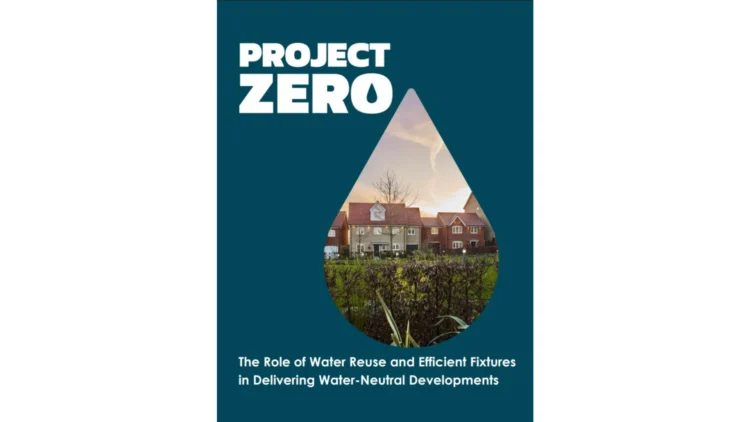
SDS Water Group companies Albion Water and SDS Infrastructure have played critical roles in facilitating the latest Project Zero Report ‘The Role of Water Reuse and Efficient Fixtures in Delivering Water-Neutral Development’, produced by WRc on behalf of Affinity Water, which explores the contribution that communal water reuse systems can make to reducing the UK’s ever widening imbalance between potable water demand and availability.
Project Zero is an Ofwat Innovation Fund initiative looking at practical ways in which new homes can use less water and build long-term resilience. At the Oaklands Hamlet development site in Chigwell, where water supply and treatment services are provided by Albion Water, 425 residential properties of varying sizes have been equipped with a dual potable and non-potable water supply network. Whilst fully installed and configured to supply toilets and external uses, current regulations prevent commissioning of the non-potable network; however, data from more than 6,200 meter readings, recorded across a six-year period from 2018 to 2024, have enabled detailed analysis and robust modelling with which to evaluate the potential performance of a water reuse system.
Non-potable water usage was found to represent approx. 26% of total consumption, almost all of which could be supplied by the reuse system. Consequently, it was established that savings in potable water demand of between 20% and 23% can be achieved by rainwater harvesting alone.
The report states that since no fundamental operational barriers could be identified that would prevent delivery of a communal water reuse system within the context of a new-build development, the barrier to wider adoption is therefore considered to be institutional, rather than technical, requiring regulatory alignment and defined governance structures to enable implementation at scale.
SDS Sales & Marketing Director, Richard Averley, said: “Through the implementation of water reuse systems, such as those supplied by SDS Infrastructure, together with continued innovation in fixtures, fittings and appliances that enhance water efficiency and reduce overall consumption, the study demonstrates that existing technology has the potential to play a key role in the achievement of water neutrality. We look forward, therefore, to the introduction of the requisite policy and regulatory framework that will enable water reuse systems, such as rainwater harvesting and greywater recycling, to be brought into the mainstream of sustainable water management.”
To find out more how water-efficient design can support future development and policy decisions, we would encourage you to access the full report here.